How Is MT-2 Handled in Research Settings?
Disclaimer: This article is intended for educational purposes only. Imperial Peptides UK products are supplied strictly for Research Use Only (RUO) and are not for human or veterinary consumption.
How Is MT-2 Handled in Research Settings?
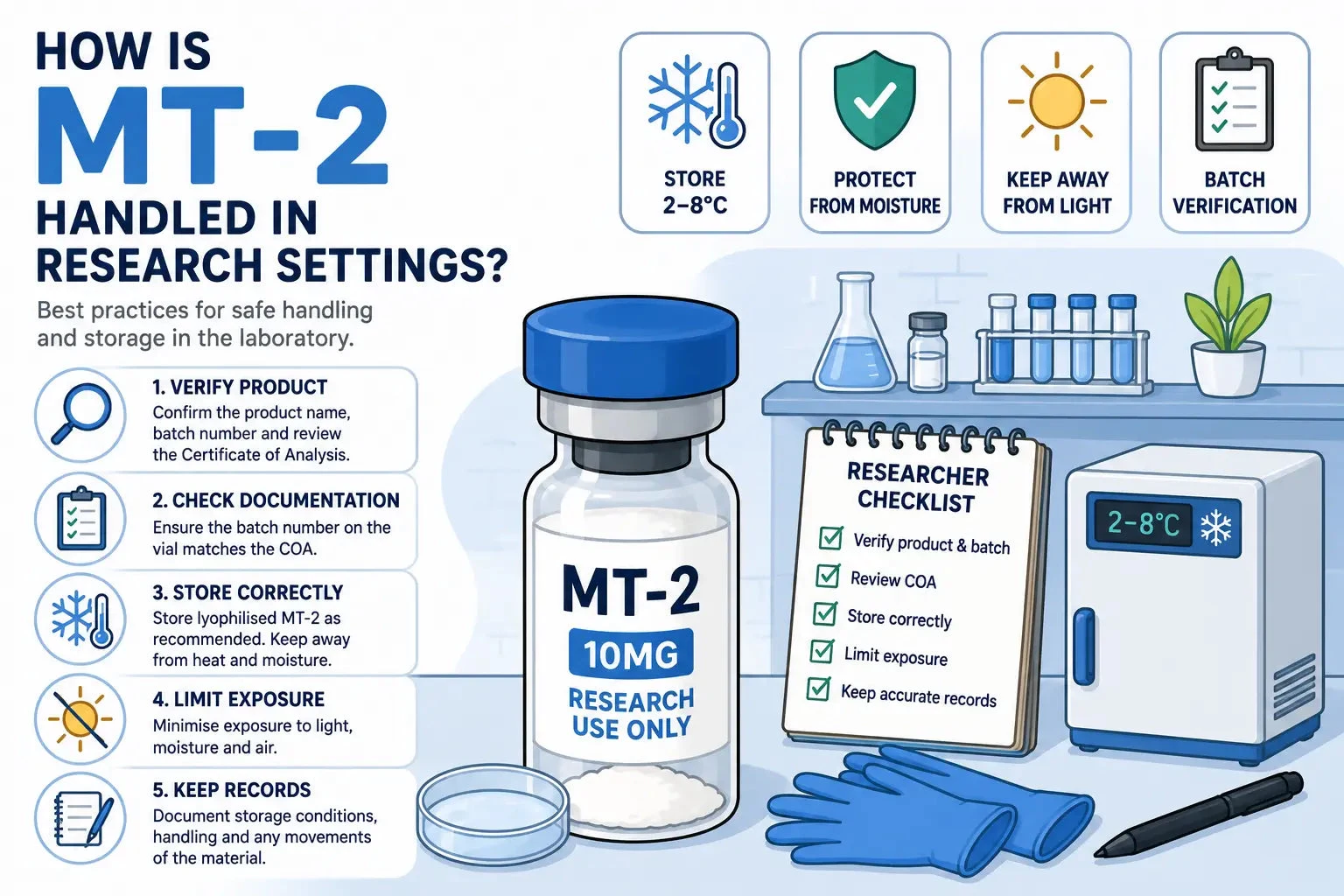
Appropriate handling of MT-2 begins with product identification, controlled storage, careful environmental management and accurate batch documentation.
Researchers comparing peptides in the UK should consider handling information alongside analytical testing, traceability and clear Research Use Only labelling.
This guide covers the main considerations involved in handling MT-2 as a lyophilised laboratory material, without discussing dosage, human use or therapeutic application.
Start With Product Identification
Before handling a research peptide, researchers should confirm exactly what material has been received. This includes checking the product name, stated quantity, batch number and supporting analytical documentation.
The batch number displayed on the vial should correspond with the relevant Certificate of Analysis. Maintaining this connection between the physical sample and its analytical record supports traceability throughout laboratory research.
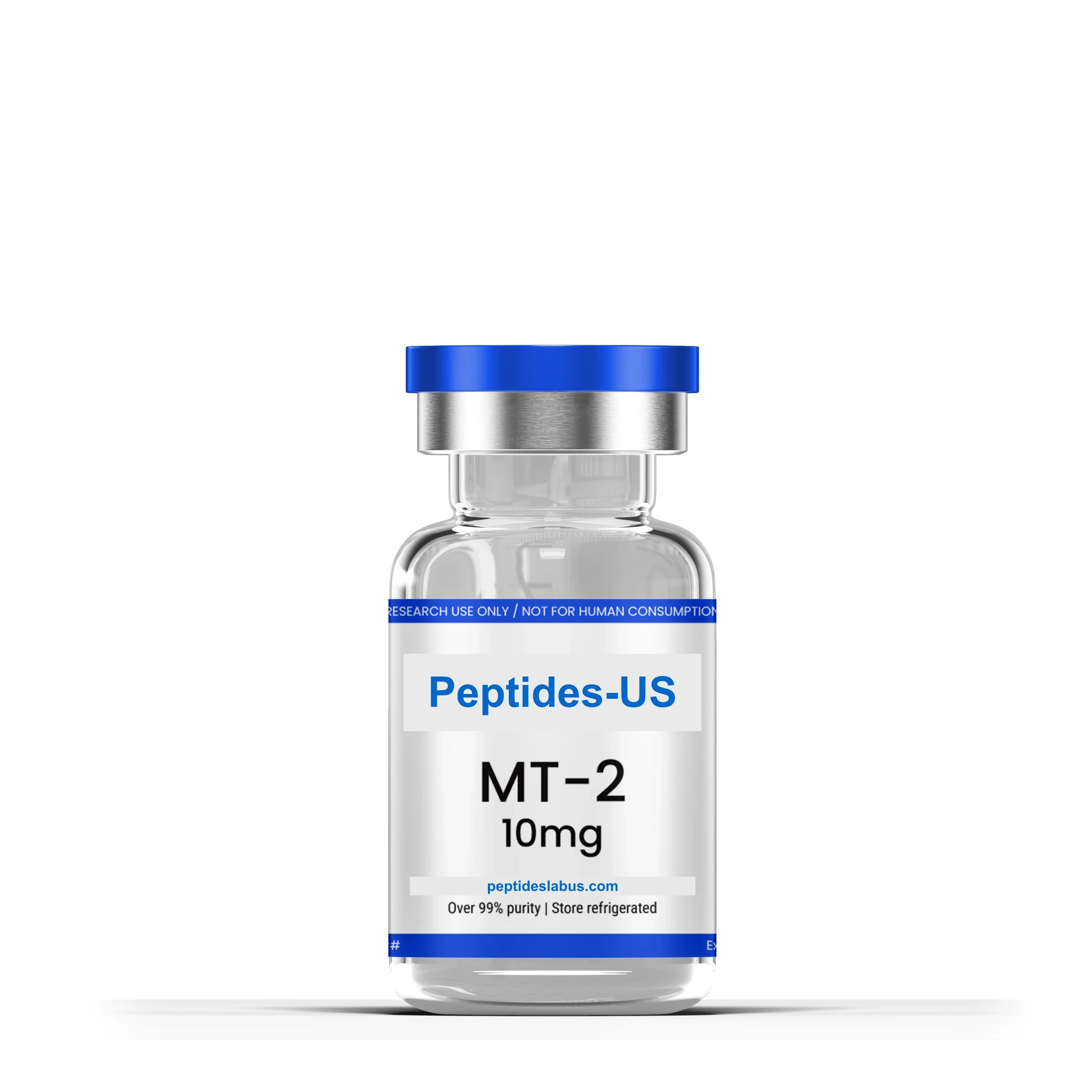
Imperial Peptides UK supplies MT-2 10mg in lyophilised form strictly for controlled laboratory research.
- Confirm the product and batch number
- Review the Certificate of Analysis
- Maintain appropriate storage conditions
- Limit unnecessary environmental exposure
- Keep accurate laboratory records
Understanding the Lyophilised Format
MT-2 is supplied as a lyophilised material. Lyophilisation, commonly known as freeze-drying, removes moisture from the material before it is sealed within the vial.
The resulting material can vary in physical appearance. It may present as a compact cake, thin layer or loose powder depending on factors associated with production and transportation. Appearance alone should not be used to determine identity or purity.
Researchers can learn more about how this process works in our guide to the lyophilisation process.
Storage and Environmental Conditions
Temperature, moisture and light exposure are important considerations when storing and handling lyophilised peptides. Researchers should follow the storage information supplied with the material and avoid unnecessary exposure to uncontrolled conditions.
Repeated movement between different environments may also create temperature fluctuations. Maintaining organised storage and limiting unnecessary handling helps provide more consistent conditions for laboratory materials.
Packaging and transportation form part of the wider handling process. Our guide to lyophilised peptide integrity during transport explains why packaging condition should be assessed when research materials arrive.
Review the Batch Documentation
Analytical documentation should be reviewed before a research material enters an experimental workflow. This helps establish a documented connection between the material being handled and the testing associated with its production batch.
A batch-specific Certificate of Analysis can provide information relating to identity, purity and other analytical testing where applicable.
Researchers can also review our guide on checking peptide batch numbers to understand how physical samples can be matched with their supporting records.
- Confirm the product identity
- Inspect the vial and packaging
- Verify the batch number
- Review the relevant COA
- Follow the stated storage guidance
- Limit unnecessary environmental exposure
- Document storage and handling conditions
Why Handling Records Matter
Laboratory records provide a documented history of how a material has been stored and handled. Recording the product, batch number, storage location and relevant handling conditions supports traceability throughout the research process.
This is particularly important when several research peptides or multiple batches are stored within the same facility. Consistent identification and recordkeeping help reduce the possibility of sample confusion.
Final Thoughts
Responsible MT-2 handling combines accurate product identification, appropriate storage, controlled environmental exposure and reliable batch documentation.
Researchers comparing UK peptides should consider these factors alongside analytical testing, product traceability and supplier transparency.
Imperial Peptides UK supplies MT-2 10mg strictly for Research Use Only, supported by batch verification and analytical documentation.
Sources and further reading
Read the original references for their scope, limitations and latest updates.
Imperial Peptides
How Is MT-2 Handled in Research Settings? (opens in a new tab)